
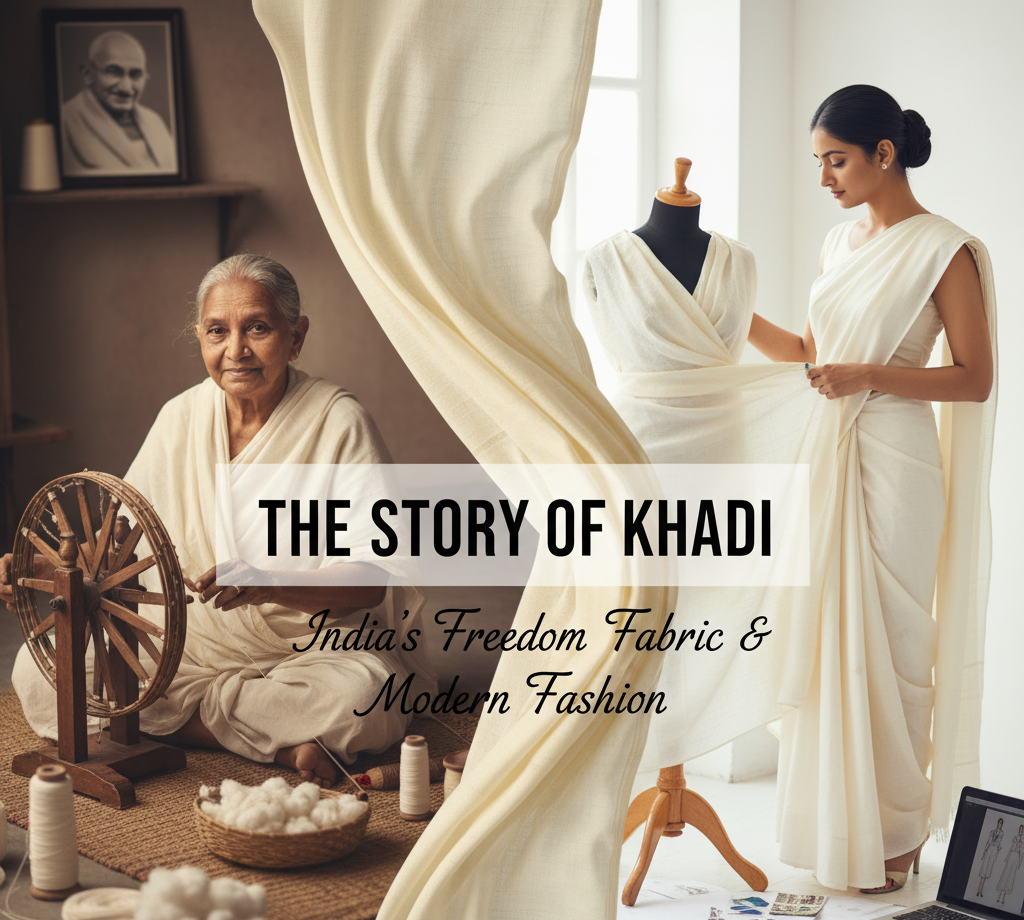
When we talk about fabrics, few hold as much history, meaning, and soul as Khadi. More than just a simple cloth, Khadi is woven into the very fabric of India’s independence movement. It is important to in understanding not just the ‘how’ of fashion, but also the ‘why’ and the ‘where’ it comes from. Today, we delve into the fascinating story of Khadi and its enduring appeal in modern fashion.
Khadi: A Symbol of Self-Reliance
The story of Khadi begins in the early 20th century, during India’s struggle for independence from British rule. Mahatma Gandhi championed Khadi as a powerful symbol of self-reliance, economic independence, and non-violence.
- Boycott Foreign Goods: At a time when India was forced to buy machine-made textiles from Britain, Gandhi urged Indians to spin and weave their own cloth. This act was a direct challenge to colonial economic exploitation.
- Empowering Rural India: The promotion of Khadi provided livelihoods for countless rural artisans and helped revive village industries.
- A Call for Unity: Wearing Khadi became a uniform for freedom fighters, uniting people across different states and social classes.
This simple, hand-spun, hand-woven fabric became a powerful tool for political and social change.
What Makes Khadi Unique?
Khadi is not just any cotton; it refers to fabrics made from cotton, silk, or wool that are hand-spun on a charkha (spinning wheel) and hand-woven on handlooms.
- Breathability: Due to its hand-spun nature, Khadi has tiny air pockets, making it incredibly breathable and comfortable in India’s varied climate. It keeps you cool in summer and surprisingly warm in winter.
- Unique Texture: No two Khadi fabrics are exactly alike. Its slightly irregular texture is a sign of its handmade quality, giving it a unique, earthy charm.
- Sustainability: Khadi is inherently sustainable. It consumes less water and energy during production compared to machine-made fabrics, and it supports local communities.
Khadi in Modern Fashion: A Timeless Comeback
For a while, Khadi was primarily associated with political figures or traditional wear. However, in recent years, this “freedom fabric” has experienced a magnificent resurgence on national and international runways.
- Designer’s Darling: Top Indian designers are now incorporating Khadi into contemporary collections, creating everything from chic Western wear to fusion garments and elegant bridal outfits. They appreciate its unique texture, versatility, and the story it carries.
- Ethical & Sustainable Choice: As consumers become more aware of the environmental and social impact of their clothes, Khadi stands out as an ethical and sustainable choice. It aligns perfectly with the global ‘slow fashion’ movement.
- Versatile Style: Khadi is no longer limited to simple kurtas. It’s being used for contemporary dresses, jackets, trousers, and accessories, proving its adaptability and timeless appeal.
At Core Fashion Academy, we encourage our students to explore and innovate with traditional Indian textiles like Khadi. Understanding its history and properties allows our future designers to create pieces that are not just fashionable, but also meaningful and rooted in our heritage.
The story of Khadi is a reminder that fashion can be much more than just clothes – it can be a symbol of history, empowerment, and a sustainable future.
Ready to weave your own story into the fabric of fashion? Explore our courses at Core Fashion Academy and connect with India’s rich textile legacy!